


Women's consultations in Naraina, Delhi


A private, unhurried space to share your health history, current medicines and questions—with clear boundaries around specialist and urgent care.
Dr. Yashasvi Verma · MD (Hom.) — B.R. Ambedkar University, Agra
What would help you feel prepared?
You have a change you want time to explain
You know when it began and how it affects your day, but not how to fit the whole story into a short appointment.
You already have notes, reports or prescriptions
You want the complete record considered before any next step is discussed.
The history feels personal
You want to speak privately, in your own words, without being hurried or spoken over.
You do not want to choose between doctors
You want your existing medical plan kept visible and every medicine disclosed to everyone involved in your care.
You are booking for your daughter or mother
You want to help with the appointment while her questions, privacy and choices stay central.
You want clear boundaries from the first visit
You want to know what can be discussed here, what stays with a specialist, and what needs urgent care first.
A consultation that starts with your whole record
A private place to begin.
Start with what has changed, when you noticed it, and what you want to ask. The first visit leaves time for the details that are difficult to fit into a rushed conversation.
Bring the full record.
Reports, past prescriptions, current medicines and your own notes stay in the same picture. Nothing is planned from a single label or one day's symptoms.
Alongside your existing doctors.
Your gynaecologist's, physician's or hospital plan stays in place. Every doctor should know what you take, and any change to prescribed medicine stays with the clinician who prescribed it.
Review with clear boundaries.
Follow-ups return to the same notes, document what has changed, and make the next step clear—including when another clinician or urgent care is the right route.

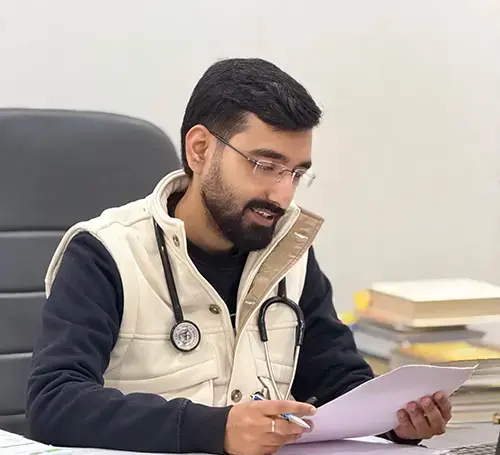
How your first visit works
- 1
Bring what you have
Bring a short timeline, relevant reports and tests, past prescriptions, and a list or photographs of current medicines and supplements.
- 2
Share the complete history
Use the visit to explain what changed, your medical history and the questions you want to discuss, in your own words and without rushing the details.
- 3
Leave with the next step clear
Dr. Verma explains the limits of his role, what stays with your existing clinician, and when specialist or urgent care should lead.

Your doctor
Dr. Yashasvi Verma
MD (Hom.) — B.R. Ambedkar University, Agra
Women's health histories are often personal and layered. I give the first consultation time, keep your current reports and medicines visible, and explain clearly where my role ends and another doctor's care should lead.
More about Dr. Verma
Booking for your mother?
Booking for your mother? Bring her reports, prescriptions and medicine list if she wants your help. In the room, her questions, privacy and choices lead the conversation.
Questions before you visit
What happens in the first consultation?
The first visit starts with your timeline, current concerns, medical history, reports and every medicine or supplement you take. Dr. Verma listens, records the details, explains the limits of his role and sets out the next step without asking you to abandon existing medical care.
Can I speak to the doctor privately?
Yes. Personal health and family details are treated as confidential. If someone comes with you, tell the clinic whether you want them in the room for all, part or none of the conversation.
Can this consultation happen alongside medicines from my gynaecologist or physician?
Bring the full list. Do not stop, reduce or replace a prescribed medicine on your own. Any change stays with the clinician who prescribed it, and every doctor involved should know the complete list.
What should I bring to the appointment?
Bring your questions, a short timeline of what changed, relevant reports and tests, past prescriptions, and a list or photographs of current medicines and supplements.
When should I go to a hospital first?
For heavy bleeding, severe or worsening lower-abdominal pain, fainting, chest pain or difficulty breathing, go to a hospital or call 112. If you may be pregnant and have pain or bleeding, seek urgent medical care.
Will the doctor tell me to stop seeing my current specialist?
No. Your existing medical care stays in place. Dr. Verma should refer you back to the appropriate clinician or hospital whenever a concern is outside his role or needs urgent, diagnostic or specialist assessment.
What ages does the clinic see for women's health?
Patients aged 18 and over consult independently. Anyone under 18 is seen with a parent or guardian present; the parent or guardian gives the history and consents to the consultation.
Are online consultations available for women's health?
Yes. The clinic offers online consultations. Keep your reports, prescriptions and current medicine list ready, just as you would for an in-person visit.
Visit details
- Clinic hours
- Mon · Wed · Fri — 11 am – 2 pm
- Tue · Thu · Sat — 11 am – 2 pm & 6 pm – 9 pm
- Sun — Closed
Near Naraina Vihar Metro Station
Ready when you are
No preparation needed — just bring your story and any current prescriptions.
For heavy bleeding, severe or worsening lower-abdominal pain, fainting, chest pain or difficulty breathing, go to a hospital or call 112 first. If you may be pregnant and have pain or bleeding, seek urgent medical care.